
Health security
in schools in Maranhão
Unicef
Alok Institute and UNICEF are together in the fight against the covid-19 pandemic in the state of Maranhão.
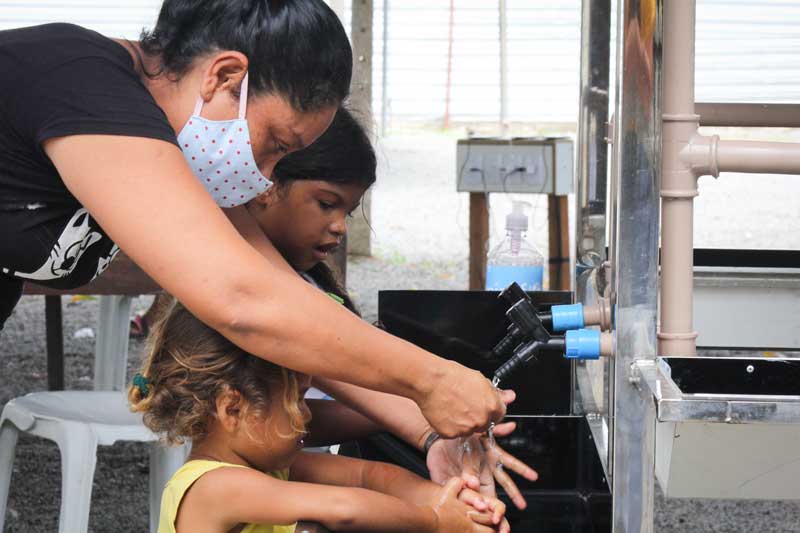
The first action of this partnership is the installation of 10 hand washing stations in quilombola communities.
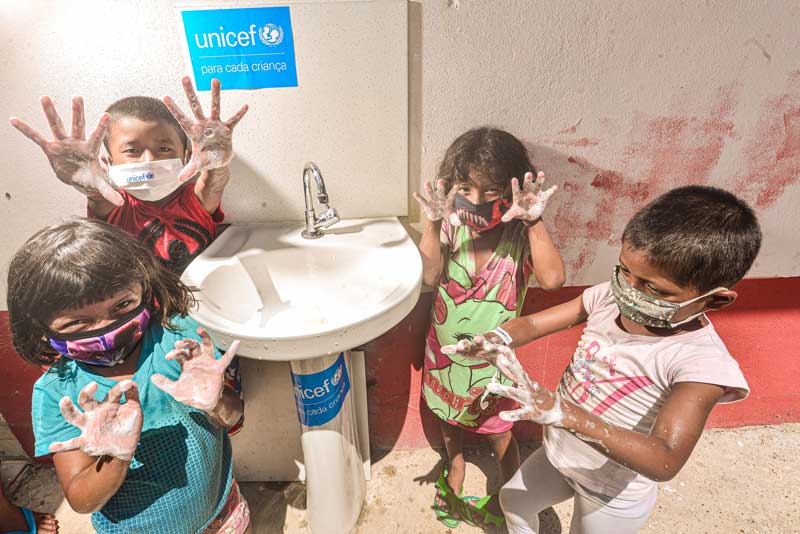
The Covid-19 pandemic has exacerbated the need for public policies that guarantee universal coverage of basic sanitation services, crucial for the population to maintain hygiene habits, recommended to avoid contagion with the new coronavirus and other diseases. Today, access to these basic services is not guaranteed in much of Brazil, with the North and Northeast regions having the worst rates of care and access to basic sanitation.
In this context, UNICEF and the Alok Institute entered into an unprecedented partnership focused on ensuring safe environments for vulnerable children, adolescents and families. Among the actions of the partnership, is the installation of 10 hand washing stations in Maranhão, prioritizing schools in quilombola communities in the city of São Luis. In addition, the alliance provides for work with the population to raise awareness of good hygiene practices and with the school community for the safe reopening of schools.
Fotos: Yareidy Perdomo, Daniel Tancredi, Michell Mello
With the reopening of schools, it is essential to sensitize the school community about the correct protocols for water, sanitation, hygiene, prevention and infection control. These activities are part of UNICEF’s SAFE strategy, which also includes teacher training, community engagement of teenagers, as well as awareness campaigns by civil society on health practices, through social media, leaflets and booklets.
The Alok Institute then starts to support the implementation of UNICEF’s SAFE strategy in one of the priority states. Most quilombola communities in the State of Maranhão are far from urban centers and far from health, commerce and services units. The majority of the population in this group is young, and only about 30% have finished high school. Many families live on less than R $ 100 / month and have been displaced from their original lands, losing access to the fishing resources with which they subsisted.
The alliance between UNICEF and the Alok Institute marks the strengthening of the Institute’s actions towards minorities and UNICEF’s mission to celebrate diversity.
Support you too:
Gastronomy
Development


